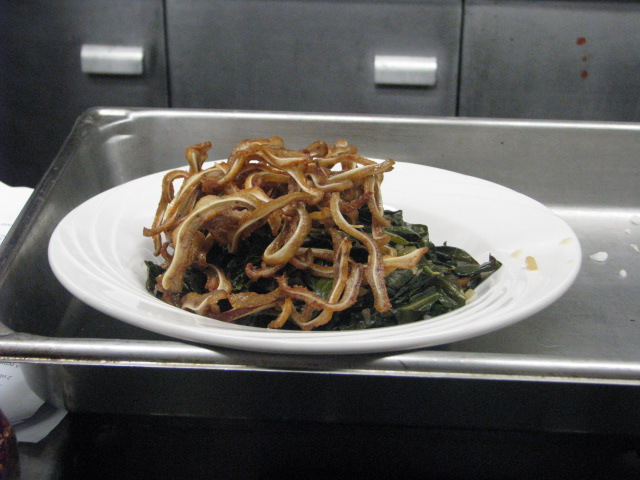
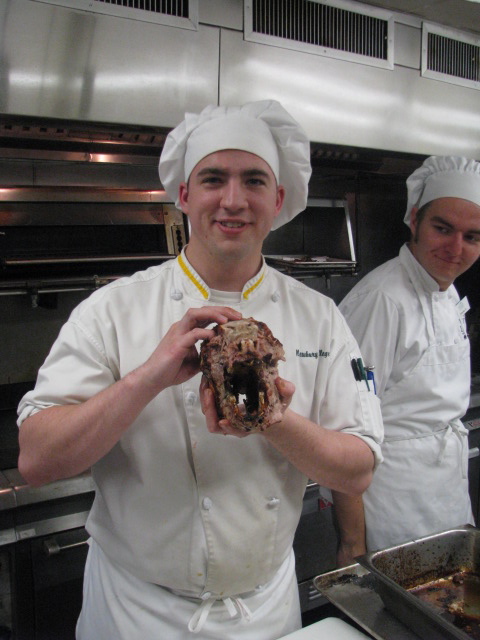
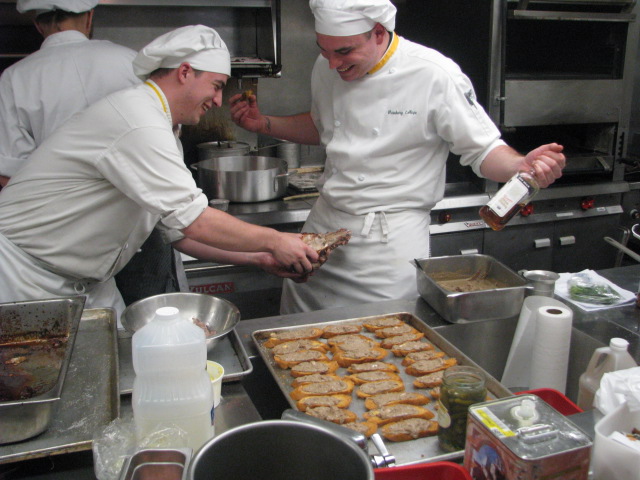
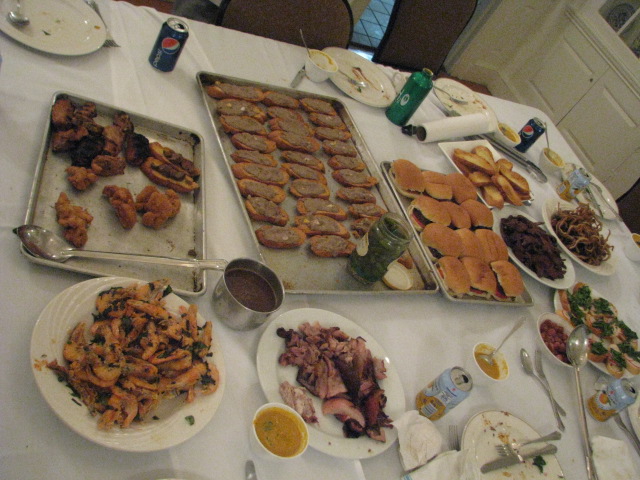
When I first started down my nose to tail path, I called my Mum to tell her all about my new project. How nose to tail eating is a more exciting and delicious way to approach food, and how I wanted to eat the foods that she and my Grandmother prepared for me as a child. As I jabbered on I started telling her how nose to tail eating was less wasteful because all of the animal is used, and because of that it's a much greener way to eat. Without hesitation Mum says "what do mean less waste, when I worked at a hotdog factory as a teenager there was no waste - trust me."
This brings me to the other side of eating nose to tail. The kind a lot of people grew up doing, totally inadvertantly. There are always those kids in the school yard who are just desperate to ruin hotdog day for everyone. Whose older siblings have no doubt told them about the gross bits (noses, bums and feet) that get ground up and put into hotdogs - yeah that one, the one you're chewing on right now.
And it's true. In fact many of the bits I've cooked here could otherwise be ground up and slipped into your hotdog (I hate to think of all the world's offal and odd bits being ground up into unrecognizable mush, but I love a good hotdog). While hearing about it on the school yard may make some of us turn vegetarian for a few hours or so, using all parts of the animal is just good business practice - always has been. That's not to say we should start blindly grinding up every cut of pig that's not a chop. What kind of world would we live in without a gloriously stuffed trotter, or perfectly roasted cheek? A dismal one is the answer. But let's face it, there's always room in the pantry for some highly seasoned, very salty preserved pork. Whether it's guanciale, leberkäse, sausages, pâté, bacon, hotdogs or SPAM.
Now I love hotdogs, but I've had this can of SPAM in my cupboard forever (not literally) and I've been dying to make SPAM musubi since my friend Gab from culinary school made them for the class. And if we're going to delve into the world of kinda weird industrial meat products, let's face it - SPAM is the king.
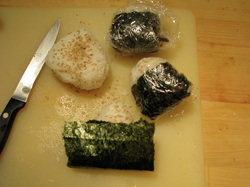
SPAM musubi is a quintessential Hawaiian dish. I think of it as a sort of onigiri, meets maki, meets sandwich. Very basically SPAM musubi is fried SPAM and sushi rice wrapped in nori. The version I've made also has a sprinkle of togarashi (a chili, sesame seed, nori condiment).
Make sure your sushi rice is ready to go. Use whatever recipe you're comfortable with. When your rice is ready, slice the SPAM into 10 slices and fry them.
Once they begin to crisp, add a combination of soy sauce and sugar. The exact mixture is up to you, I surprised myself with how much sugar I added (a lot), and I was really happy with the result.
Reduce this mixture while flipping the SPAM - it's going to get very sticky looking. Which is a good thing.
Unless you have a musubi maker, take both ends off your SPAM can and use it to shape your musubi. Split each nori sheet in half,and place SPAM can in center. Fill bottom of SPAM can with a layer of rice, sprinkle with togarashi, top with SPAM and then cover with another layer of rice. Next gently remove the can while keeping each layer in place.
Finally, dampen the ends of the nori and wrap around rice/SPAM stack.
You can slice it into smaller pieces, or not. They keep really well wrapped individually in plastic. I love SPAM musubi, it's salty and sweet and fatty and porky. Delicious. Take these on a nice long hike, or road trip or just keep in your fridge for a midnight snack.
My stock boiled away for several hours, smelling delicious. Eventually I plucked out the head to see what I'd been left with. As with most heads there was a good amount of meat, and all the hours of boiling had actually done very good things to the tongue, but the brain was mush. Very close to the texture of wallpaper paste.
I picked the meat, and peeled the tongue. The broth was very strong, my thought is that they killed the lamb by inserting something into its head, which bled quite a bit (I discovered that after I cleavered the head open) so there was quite a bit of blood in the stock. Not something I thought about.
The scotch broth I made had loads of flavour, but to me seemed a tad gamier than it normally is. And I'm admittedly disappointed about not getting to try some yummy fried brains, or cold brains on toast.
I did, however, get a very flavourful (if maybe a tad gamey) bowl of soup.
Thanks to my new meat CSA (Stillman's Turkey Farm) I've managed to get my hands on a lambs head.My grand plan was to break down my lambs head into it's various parts (skull, brain, tongue) and use each of those elements in different dishes. This pan was derailed when I realized that in order to break down this head I needed a saw. And I do not have a food safe saw.
Trying my best to break it down, this didn't help at all.
The obvious solution to my dilemma is soup. I'm hoping that if I keep my stock boiling really low then my tongue and brain wont get overcooked. We'll see how I do.
Fingers crossed my plan works!
Worst case scenario is a really killer batch of scotch broth - and all things considered that's a pretty awesome worst case.
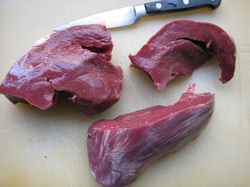
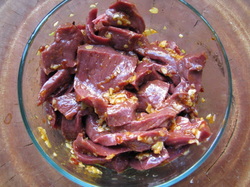
My lovely, lonely, little duck liver soaked in mirin and soy for a night. I saved a piece of duck fat and and put it in a low pan to render out a good tablespoon of fat to use to sear the liver.
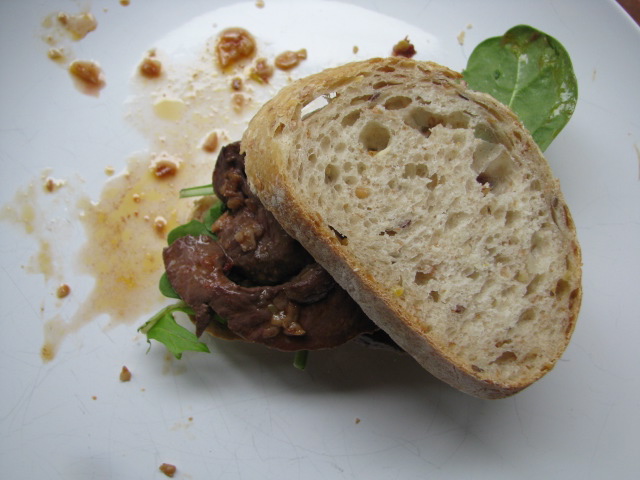
The flavour is a little sweet, a little salty and very rich. With a little leftover baguette and a pinch of cracked black pepper I've got a very nice nibble to have with a glass of wine before supper.
We managed to get two full dinners and one lovely snack from a single eight dollar duck. That is one delicious and cost effective bird.
Even though my roasted duck didn't turn out as well as I'd hoped that's no reason I can't create a masterpiece out of the leftovers. A big pot of duck soup with some fresh veggies and soba noodles.
Homemade stock is one of the coziest things that can ever come out of a kitchen. The smells and the warmth totally engulf the entire house, and you get another entire meal out of the carcass of last nights supper.
I put the leftovers from last night straight into a pot, which sat in my fridge all day waiting for me to come home. Once I got home I simply added the veggies I had on hand (a chili pepper, a sweet pepper, some celery, a few garlic cloves, a few peppercorns, half an onion, a sad piece of ginger and the daikon sprouts off my plate from last nights supper) and covered the entire mess with cold water.
Turn the heat to medium-high and wait an hour or two. Generally the longer you simmer the stock the better it will be, but I've really only got the wings and carcass of my duck. The legs are going to go in later to loosen up, then I'll shred the meat and add it to my finished soup.
When the stock is done I drain and discard all the veggies and the bones. If you're feeling particularly zealous you can strip the meat from the neck, and also test the gizzards to see how tender they are. If they're really tough you can slice them thin and poach them in the stock again. This is also the point where you want to taste and season your stock - don't be afraid, it can take a lot of salt.
Sliced gizzards, bottom right.
I love to add a few nice crisp veggies to my final dish, so I also like to poach some broccoli and peppers (or whatever you've got) in the broth before I add my noodles.
Once your stock is drained and seasoned, your veggies are poached, and all your meat is shredded and ready you've just got to cook the noodles and assemble the soup.
The flavour is wonderful, much richer than chicken stock. And I seem to have stumbled onto something excellent with the combo of veggies I used. I think it's the lack of carrot, a totally over rated stock veggie if you ask me. This is some seriously rich, complex, ducky goodness. A completely new, awesome, meal made out of what's in the fridge and the bones of Sunday dinner.
Ducks are a truly wonderful creature, right up there with pigs in my book. I've been meaning to roast a duck forever, and last night I finally got around to it.
This duck came from my local Asian grocery. It seemed a little small (very different from the plump European style duck that I'm more accustomed to) but in my mind it seemed perfect for two people.
The cavity of my duck was stuffed with all sorts of lovely giblets; a nice big neck, a couple gizzards, heart and liver. Some of those bits are destined for duck soup, but the liver is getting marinated then sauteed in duck fat as a special treat.
Simple is the way to go when roasting a duck. Poke holes in the skin to allow the fat to drip out, and use more salt than it looks like you probably need.
Into a waiting 325 degree oven, which I checked every 15-20 minutes. Once it started to brown I made a quick glaze (honey, sriracha, soy) and brushed it all over. The duck went back into a now 425 degree oven to finish crisping.
I served just the breast, which to be honest was not enough. The breast was thin, and not quite juicy enough, and the skin was not the desired level of crisp.
Alongside some sticky rice, steamed bok ckoy and some daikon sprouts it was a pretty good dinner. Definitely room for improvement, which is never a bad thing because that means there is more duck in my future.
After spending the summer sharing a veggie CSA with a buddy of mine I'm totally hooked. Community Supported Agriculture is the way to go - no grocery shopping and different produce every week. Not to mention supporting local farmers. There is no downside.
These particular buddies whom I shared the CSA with happen to be are vegetarian, so I branched out on my own to join a Meat CSA. Small farm in Mass, who will be supplying us with 5lbs a month of humanely raised beef, chicken, pork and lamb.
I couldn't resist asking about getting some offal, and some other more interesting cuts. Turns out that they pack a box of cuts free for the taking at all pick ups! This information has turned around my day.
If you're in the Massachusetts area check out Stillman's at the Turkey Farm for some local, humanely and sustainably raised meats.
Why hello there! It's been a while, hasn't it? Why, yes. Yes it has.
Alright, it's been a busy summer. Lots of time spent with friends. New job, with new hours. My first 40 hour, nine to five.
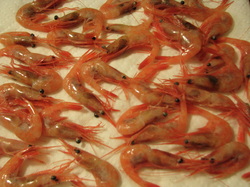
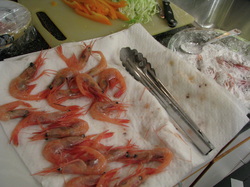
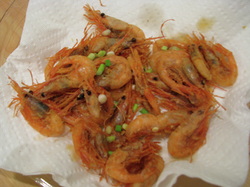
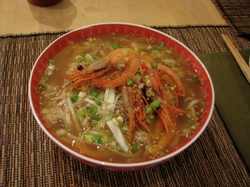
With summer came summer grill outs. Late this summer I discovered the joy of grilling head-on shrimp, especially in a simple chili marinade.
There's something so satisfying about looking your lunch in their beady little eyes. These guys cost 7$ and change for a pound and a half at my new favorite store HMART. If you've got one in your area go right now.
Marinate overnight if you've got the time, if not try to baste them for the minute and a half they are on the grill. For this particular batch I used Sriracha sauce and another one or two chili sauces floating around my fridge. Truthfully, it's really hard to screw up a recipe of grilled shrimp.
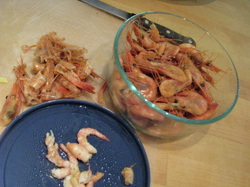
The great thing about shrimp is that even with their heads still on 90% of people will still eat them. My dear friend Mandy, who is not a nose to tail person at all, ate these and loved them. Granted she did not go as far as sucking on their little heads after tearing them off like some of us - but still.
Serve hot off the grill and definitely suck on their little heads - lots of great flavour in there.
Looking forward to fall and some nice slow braises. Maybe I'll even tackle tripe.
Nose to tail eating can sometimes involve cooking and eating some things that can sometimes seem unappetizing - even to those of us who are offal inclined. And then there's fois gras.
Fois is the liver of a duck that has been force fed. What the birds are fed is up to the producer, sometimes it's a combination of different grain, sometimes it's brandy soaked bread. There is a lot of controversy surrounding how fois gras is made, some peope feel the ducks are being tortured by going through the gravage (forcefeeding) process - I've seen these ducks happily following the farmers to get their suppers.
Opinions on feeding ducks aside, fois gras is delicious, luscious and a treat. I purchased my tiny piece at one of my local gourmet shops, it's Grade B Fois Gras, which means that there are some veins present but the flavour and texture are still fois. Just a little more high maintenance. They are fairly easily removed with a sharp knife. For those on a budget I highly suggest it.
A lovely treat.
Before I left my last job I bought a jar of cider jelly, which is very simply a gallon of cider reduced to a small jar of jelly - the flavour is sweet and tart and appley. I've also got a little bit of homemade blueberry lime jam. Very simply I'm going to toast some baguette, sear my fois gras in a very hot pan and serve them with my two preserves.
Don't salt the liver until it's seared, then give it a generous sprinkle. The one thing to remember is to not over cook your precious liver, you want it quivering on the inside and crisp on the outside.
Our lovely lump of liver.
The liver is flavourful, fatty and salty, the cider jelly is sweet and tart and the toast is crisp (the jam is alright - not bad for a first batch). A nice glass of wine and Ross and I are feeling very fat and happy.