Suet is raw beef fat found around the kidneys and loins, tallow is what you have after you melt it, and strain it.
After my last adventure rendering lard, being stuck in the kitchen for six hours watching fat melt I was prepared for the long haul. But surprisingly, tallow was much more forgiving than lard.
After my last adventure rendering lard, being stuck in the kitchen for six hours watching fat melt I was prepared for the long haul. But surprisingly, tallow was much more forgiving than lard.
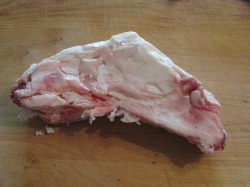
Suet.
First you chop the suet into smallish pieces.
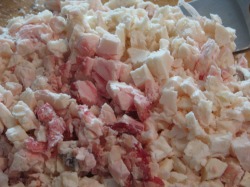
Put your chopped suet into a thick bottomed pot, over a low heat and prepare for the waiting game to begin.
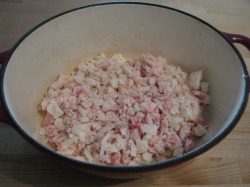
Or not.
My suet took half the time to melt than my pig fat did - which was a nice surprise.
My suet took half the time to melt than my pig fat did - which was a nice surprise.
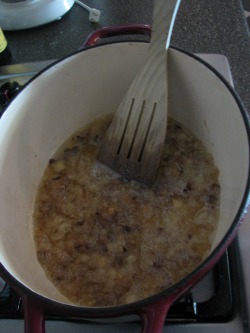
After about an hour, maybe a tad longer.
The tallow that I'm making is destined for french fries, beef fat makes really great fries. It's also shelf stable if kept in an airtight container.
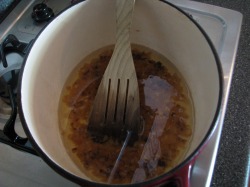
At the three hour mark.
Much like lard my next steps are strain out the hard bits that have sunk to the bottom. Many recipes suggest that after you strain you heat again.
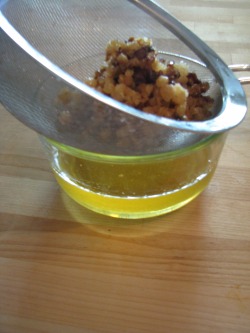
Strained, hot tallow.
That's it - in three hours (not six) I have beautiful yellow tallow that will sit in the fridge and turn a lovely crisp white colour once it has chilled.
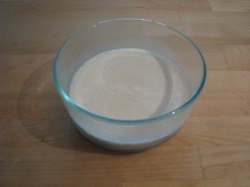
Chilled tallow.
Now off to make some fries, or candles.
 RSS Feed
