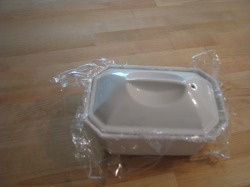
Suet is raw beef fat found around the kidneys and loins, tallow is what you have after you melt it, and strain it.
After my last adventure rendering lard, being stuck in the kitchen for six hours watching fat melt I was prepared for the long haul. But surprisingly, tallow was much more forgiving than lard.
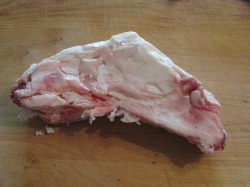
Suet.
First you chop the suet into smallish pieces.
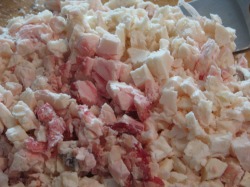
Put your chopped suet into a thick bottomed pot, over a low heat and prepare for the waiting game to begin.
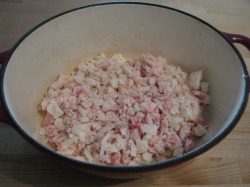
Or not.
My suet took half the time to melt than my pig fat did - which was a nice surprise.
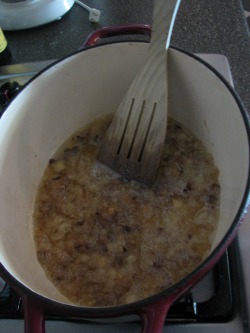
After about an hour, maybe a tad longer.
The tallow that I'm making is destined for french fries, beef fat makes really great fries. It's also shelf stable if kept in an airtight container.
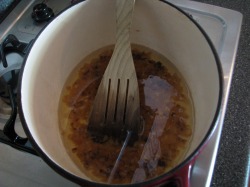
At the three hour mark.
Much like lard my next steps are strain out the hard bits that have sunk to the bottom. Many recipes suggest that after you strain you heat again.
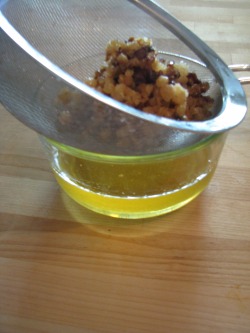
Strained, hot tallow.
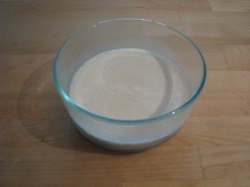
That's it - in three hours (not six) I have beautiful yellow tallow that will sit in the fridge and turn a lovely crisp white colour once it has chilled.
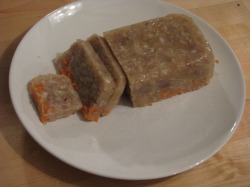
Having been repeatedly told that one of the biggest barriers to enjoying headcheese is the word headcheese I've decided to make a very similar dish (meat set in gelatin) but use a few different ingredients and call it something a tad more pleasing to the ear - pain de pieds was born.
Playing off of headcheese, I decided on feetbread (I used trotters as my gelatin source.) That name, however, did not sound any more appetizing than headcheese. A light bulb went off, I translated it into french and a much more pleasing (at least in name) dish was born.
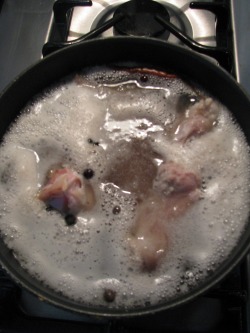
Trotters and dried spices soming up to a simmer.
My chopped up trotters (pigs feet) went into a pot of cold water with some dried whole spices; juniper, peppercorns, allspice and whole dried chili.
This pot was on the stove, being occasionally filled up from my kettle, for a few hours. When cooking trotters always skim the foam that appears on the top of the pot. There will be lots of foam.
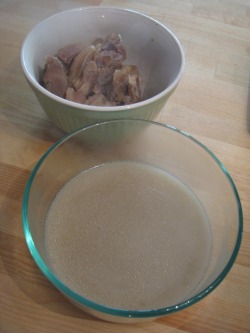
When the trotters are lovely and tender strain the trotters and keep the liquid. It will be cloudy and full of gelatin (awesome).
Feet and cooking liquid.
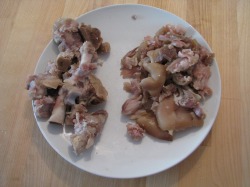
When the trotters are cool enough to handle carefully pick all the meat, skin and tendon from the bones. Make very sure you remove all the bones.
Bones on the left, good stuff on the right.
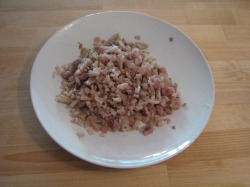
Take all the meat, skin etc that you've lovingly separated from the bones and chop it finely.
Put your pile of meaty skin, and gelatinous stock in the fridge and let the stock set.
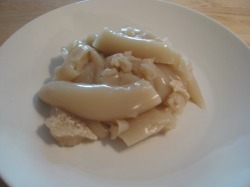
Once set its texture should look like this.
Yum.
Taste your trotter jello - it should taste savory but not too complex. Keep in mind that this will be served cold, so go a little heavy on the seasoning.
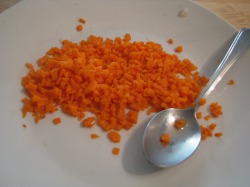
Put your jello in a pot to melt. I seasoned mine with salt, siracha, white wine and cider vinegar. I also chopped up the only carrot in my house (which is kinda sad) in a fine brunoise and put it in my simmering stock to cook very slightly.
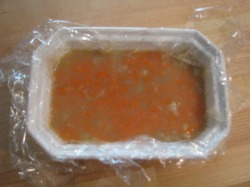
Line a small, loaf shaped dish with plastic and put your chopped feet in the bottom. Strain the carrots, pour your seasoned liquid over the chopped feet and sprinkle the carrot over the liquid.
Put the whole mess back in the fridge to set, ideally overnight.
I'm too excited to be back, I just couldn't wait to post. I don't have a finished image yet, tomorrow, I promise.
Also - I wanted to say "Hi!" and thanks for stopping by Formaggio yesterday to the nice man from Michigan. I was in the shop later that day, and was really sorry I missed you!